What to Feed a Maine Coon: Kitten and Adult Cat Diet
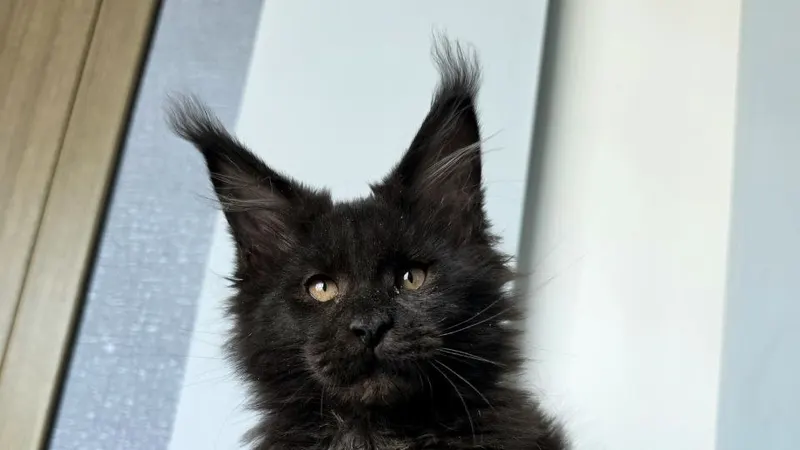
A Maine Coon eats one and a half to two times more than a regular cat, grows until three to four years of age, and can reach 7–10 kg. Nutritional errors in such a cat quickly become apparent: dull coat, overweight, joint problems.
The Main Principle: Protein and More Protein
A cat is an obligate carnivore. For a Maine Coon, an optimal diet is one where:
- protein — at least 35–40% (higher for kittens);
- the first ingredient is specific meat, not "meat meal" or corn;
- there is taurine — an amino acid critical for heart health;
- calcium and phosphorus are balanced — crucial for the skeletal development of a large cat.
How Many Times a Day to Feed
- 2–4 months — 4–5 times a day;
- 4–6 months — 3–4 times;
- 6–12 months — 3 times;
- over one year — 2 times a day.
Dry food can be left available freely only if the cat is not prone to overeating. Maine Coons are often prone to this, so portioned feeding is more reliable.
How Much Food is Needed
A guideline for an 8 kg adult cat is approximately 90–110 g of dry food per day or 250–350 g of wet food. The exact amount depends on activity levels and is always indicated on the packaging; adjust according to your cat's condition, not its appetite.
Dry, Wet, or Natural Diet
Commercial Food
The most predictable option: the composition is balanced, and nothing needs to be calculated. A sensible approach is dry food as a base, supplemented with wet food to maintain hydration. For the breed, there are Maine Coon specific lines with large kibble that the cat is encouraged to chew rather than swallow whole.
Natural Diet
This works, but requires discipline: meat (beef, turkey, rabbit), offal, taurine and vitamin supplements, and calculation by weight. It is not advisable to mix natural food and commercial food in the same feeding — they are digested differently.
What Maine Coons Cannot Have
- milk (adult cats cannot digest lactose);
- river fish and fish every day — risk of urolithiasis;
- pork, bones, smoked foods, sweets, onions, and garlic;
- table scraps and "just a taste" — for a large cat, this quickly leads to excess weight.
Water
Maine Coons love running water and often play with it using their paws. A water fountain is not a luxury: the more a cat drinks, the lower the risk of kidney and urinary tract problems. Place the water bowl separately from food.
How to Transition to New Food
An abrupt change is an almost guaranteed digestive upset. Transition over 7–10 days, mixing the new food with the old and gradually increasing its proportion: 25% → 50% → 75% → 100%. We provide kittens with an initial supply of their familiar food so that the move to a new home and dietary change do not coincide.
What else your kitten will need in the first few days is covered in the article What to Buy for Your Maine Coon Kitten. You can see who is currently looking for a home in the Kittens section.